
Filipino Cuisine: History, Regions, and What to Order First
How Philippine food developed over time—from island staples to trade and colonial layers—and a short list of reliable first orders in Quezon City.
Introduction
Philippine food is not one uniform style—it is an archipelago of languages, coastlines, and family recipes held together by rice, vinegar, and a habit of eating together.
This article focuses on historical development: how staples and outside contact stacked into today’s mix. For how Luzon, Visayas, and Mindanao differ on the plate, see our regional Philippine cuisine overview. For why foreign techniques blended with local tastes, see origins of Filipino cuisine: cultural influences explained. Below that story, a compact list of first orders for Quezon City.
How Philippine food developed over time
Pre-colonial and Austronesian bases. Rice, coconut, tubers, fish, and vinegar-based preservation were already central before sustained European contact. Fermentation and souring were practical responses to climate, not borrowed fads.
Trade era. Chinese merchants and settlers brought noodles, soy, and wok cooking; goods moved through port towns long before modern nations. Those techniques met local ingredients and became lumpia, pancit, and siopao-style dishes—not copies of another country’s table, but local habits with foreign tools.
Spanish colonial period. Tomatoes, garlic, onions, olive oil, and Catholic feast culture added slow braises, roast pig (lechon), and vocabulary like adobo. Spanish-era dishes were adapted to what grew here and who could afford meat.
American period and independence. Canned goods, baking, cafeterias, and English-language schooling spread new snacks and shortcuts. Sweet spaghetti, pan de sal, and fast-food formats sit in this layer—often merged with older tastes.
Today. Metro Manila and Quezon City compress centuries: carinderias, mall chains, and fine dining sit side by side. The timeline explains the variety; regional articles explain how flavors change by island.
Where regions belong (not repeated here)
Island geography and local languages mean “Filipino food” on a menu can point to several different traditions. This history piece does not catalog provinces—that is the job of our regional Philippine cuisine overview, with Luzon, Visayas, and Mindanao laid out for ordering.
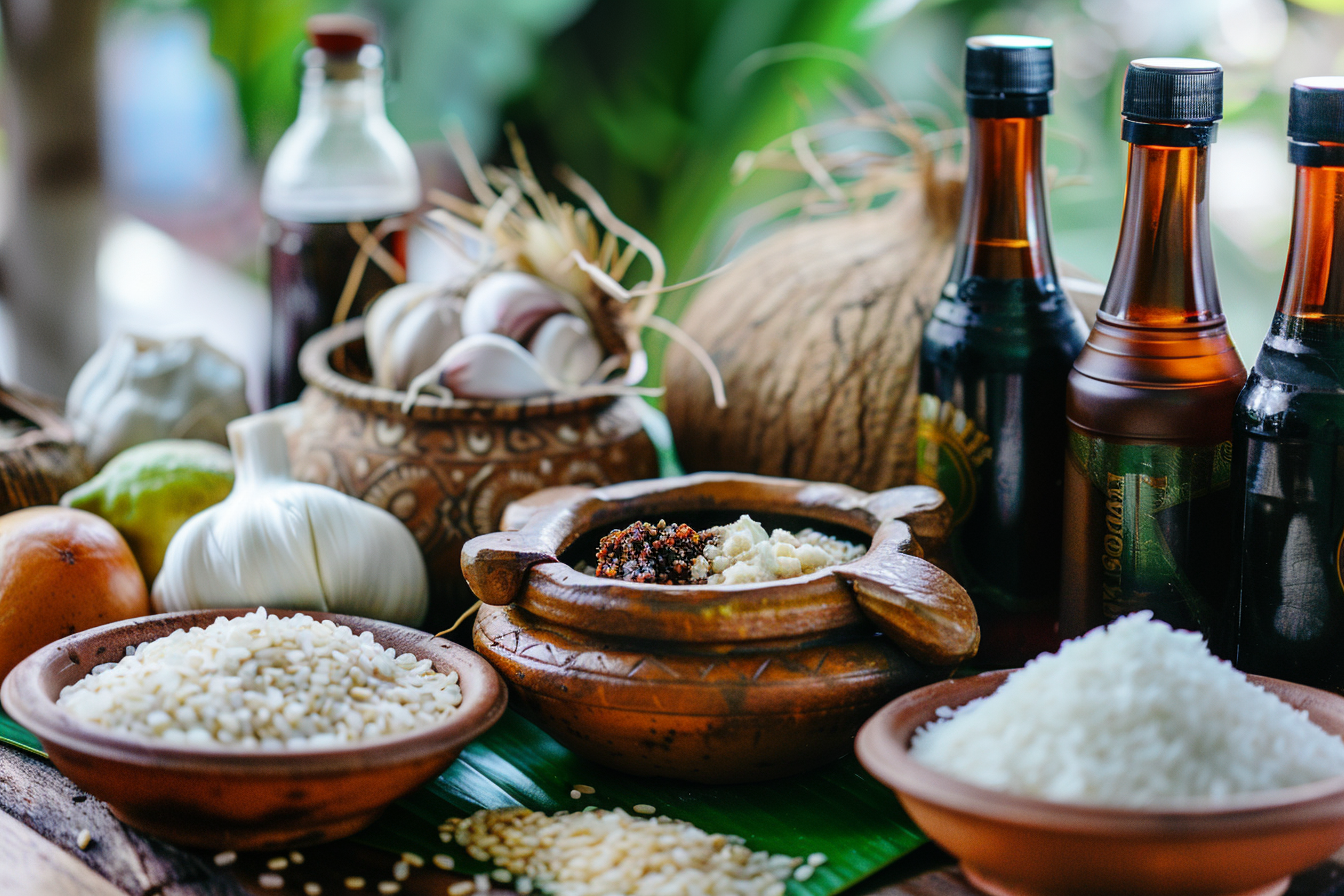
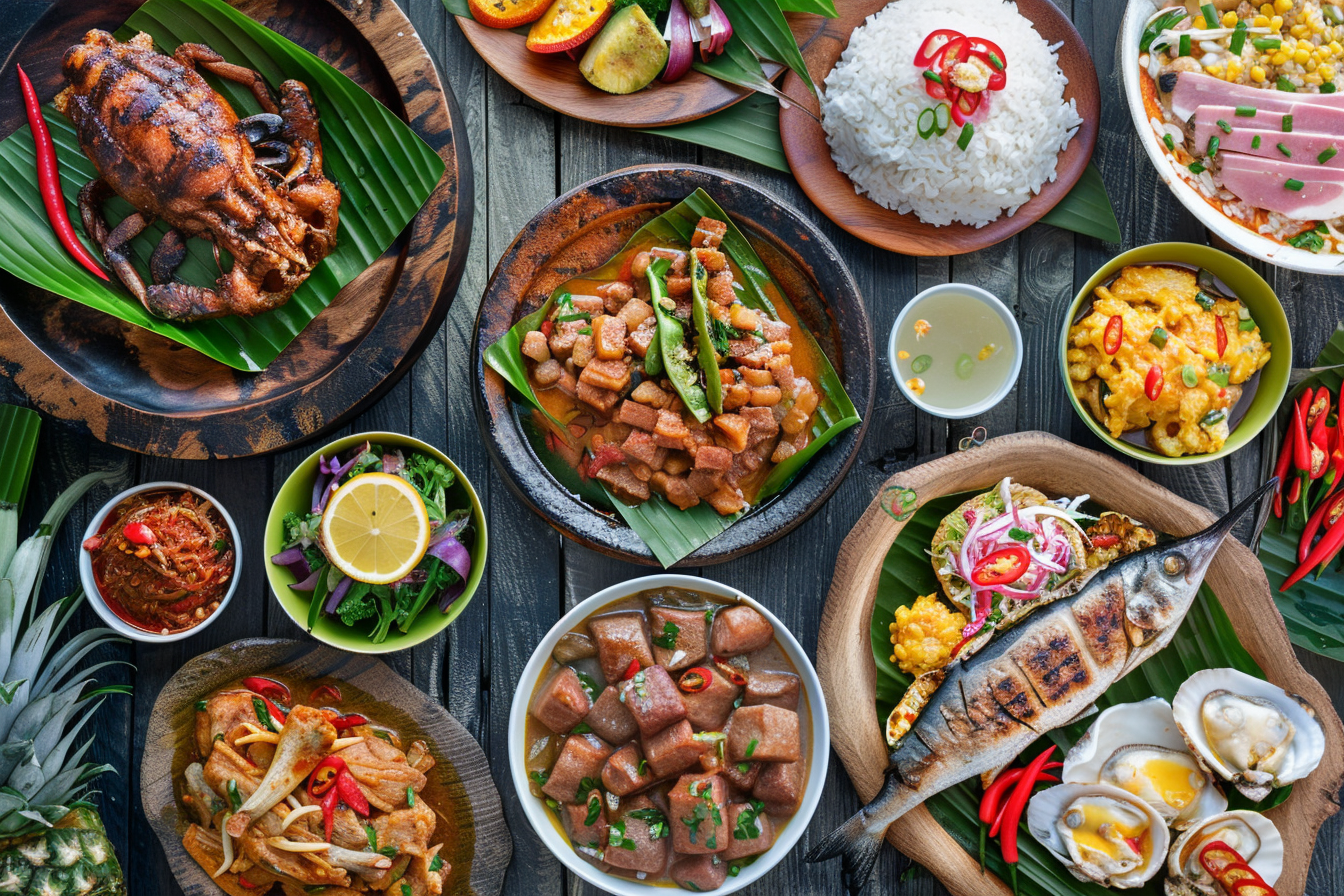
If you are asking why soy, vinegar, tomato, or American-style sweets show up together, read cultural influences explained. The photo below is a reminder that plates vary by coast and family, not a full map.
First orders: a practical starter list
After the timeline, these dishes are widely available and help you calibrate flavor without committing to a full regional tour:
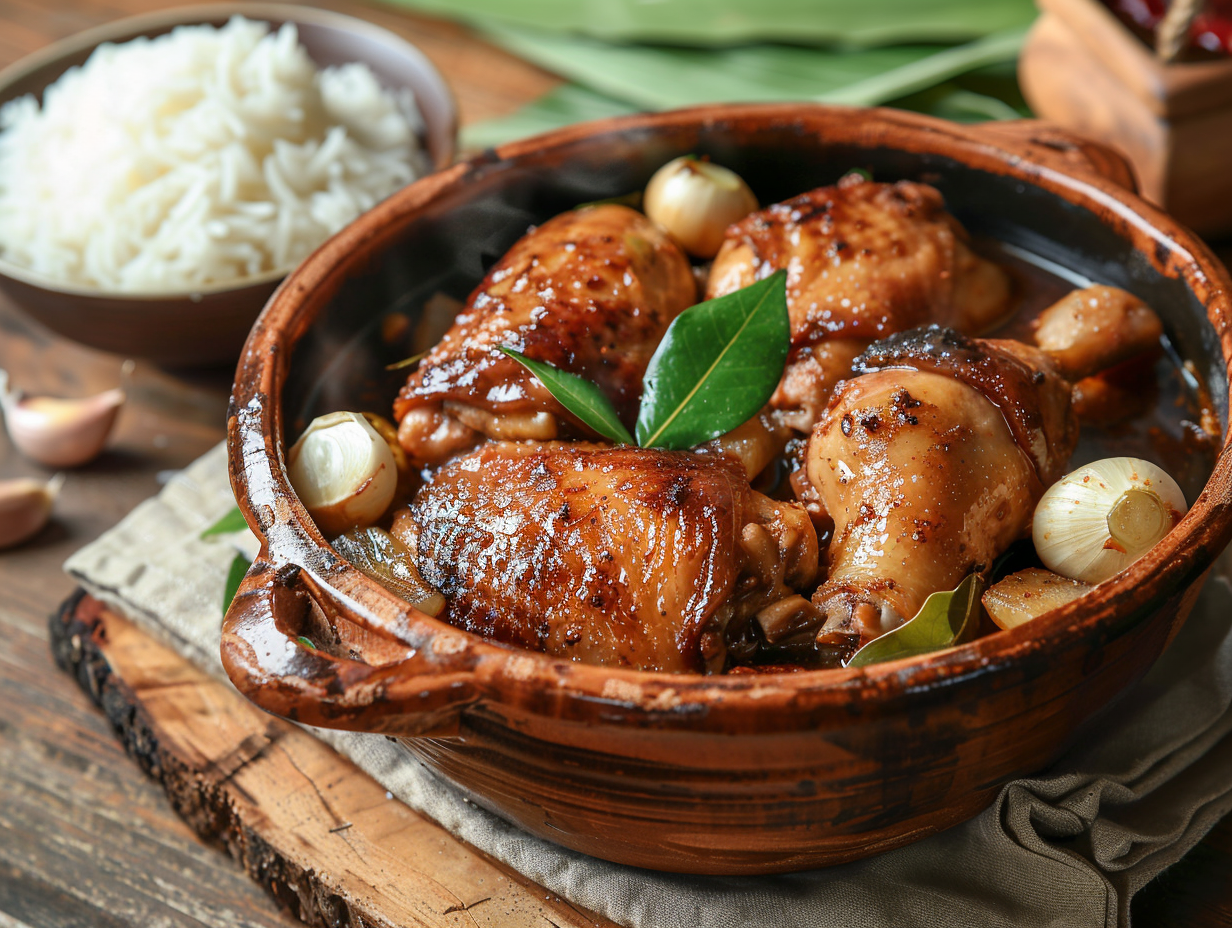
Adobo (vinegar–soy braise) and sinigang (sour soup) cover salty-sour range. Pancit (noodles) shows Chinese-Filipino habit. Lechon or other roast pork is the celebration benchmark. Add rice and one vegetable or salad if the menu allows.
Regional twists—Cebu lechon vs Luzon, Bicol coconut heat vs Ilocano vinegar—belong in the regional overview, not in a first lunch.
From history to today’s table
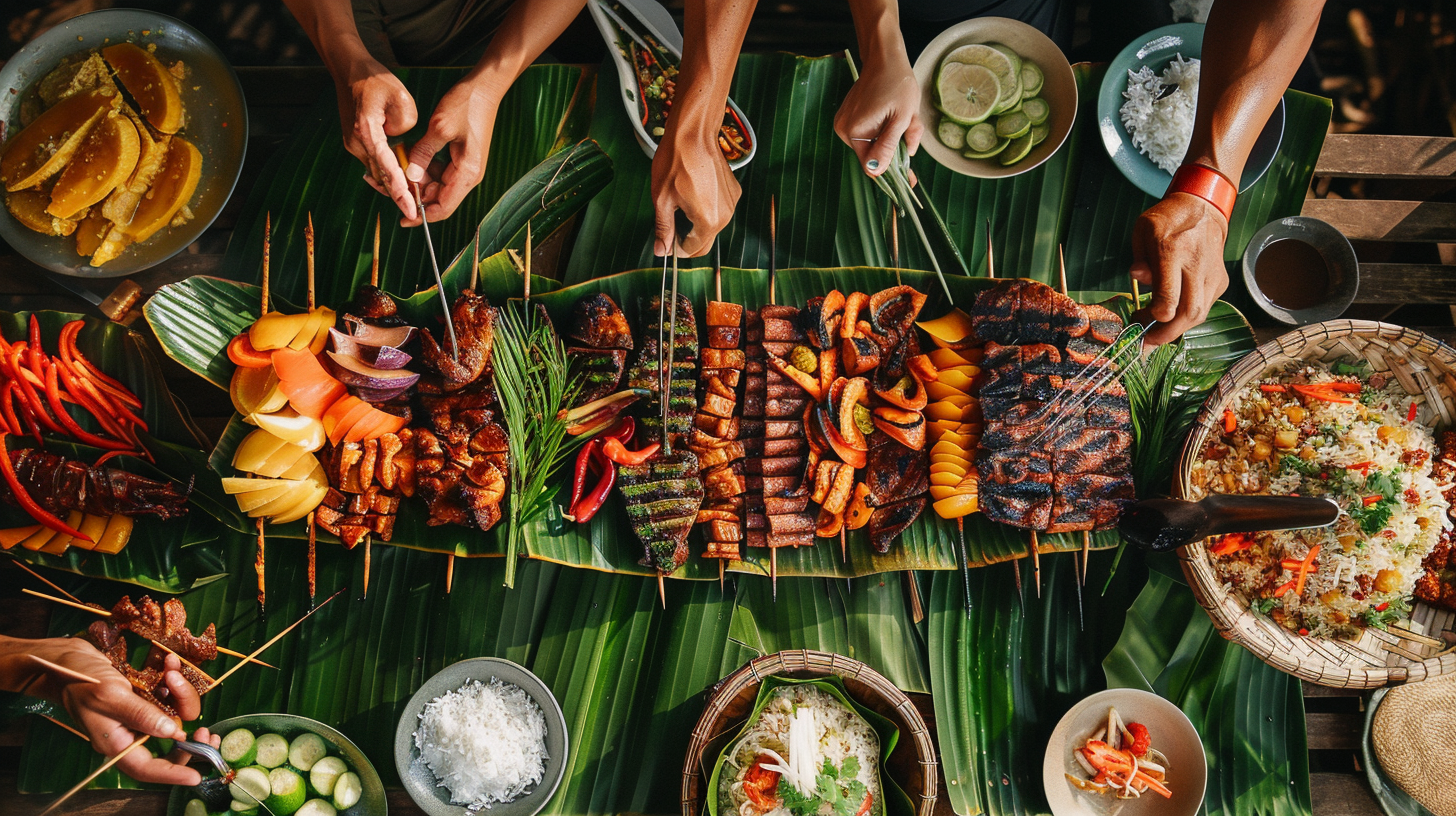
Shared rice and ulam, fiesta abundance, and street merienda are not random—they are the living shape of the timeline above. Communal eating made sense when labor was shared and refrigeration was limited; it still fits how many families and Filipino restaurants serve food in Quezon City.
For customs in detail—kamayan, pulutan, guest etiquette—see our guide to Filipino dining culture and customs.
Where to taste centuries of layering in one QC visit
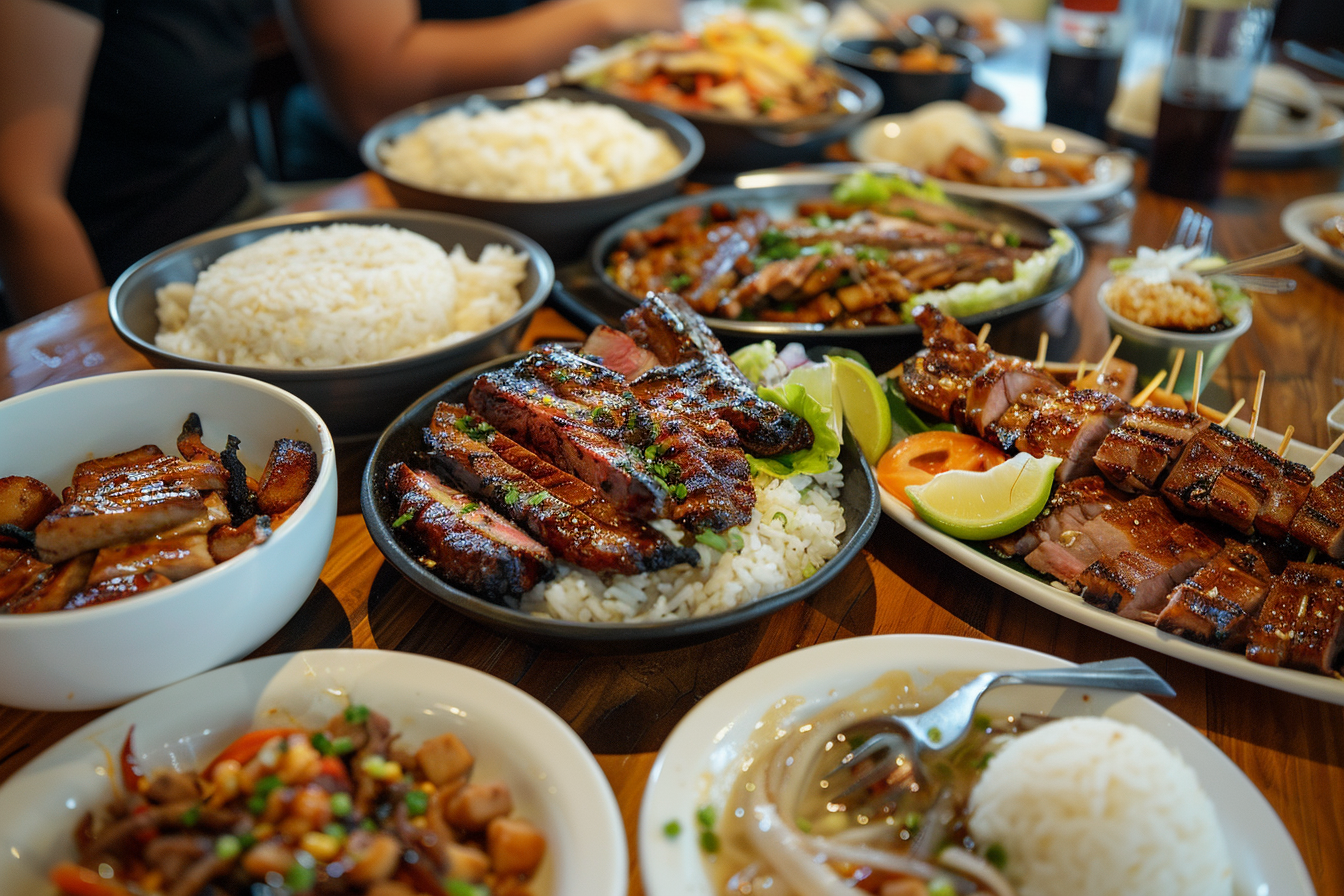
This article is about long arcs, not a single restaurant. To sample that stack in practice—trade, colonial habits, and modern Filipino comfort—we use two different formats: a wide buffet (many stations, quick cross-section) and a home-style Timog name for grilled Filipino classics and slow-cooked dishes.
More: Filipino restaurants, buffets, SM North, Timog, directory.
Frequently Asked Questions
Is this article about history or about regional dishes?
It focuses on historical development—how staples and outside contact stacked into today’s mix. For Luzon, Visayas, and Mindanao compared on the plate, read our regional overview. For why foreign and local habits blended, read cultural influences explained.
How did Philippine food develop in broad strokes?
Austronesian bases (rice, coconut, vinegar) came first; Chinese trade added noodles and soy techniques; Spanish colonization added ingredients and feast dishes; the American period added canned goods and new snacks. Cities like Quezon City compress those layers on one menu.
What are good first dishes to try?
Adobo, sinigang, pancit, and lechon or roast pork—with rice—cover a useful range. Save regional deep dives for after you have that baseline.
What about kamayan and dining etiquette?
This article only sketches how communal eating connects to the past. For kamayan, merienda, and guest customs, see Filipino dining culture and customs.
Sources

Written by Zachary Siecinski
Lead food writer · Restaurants Quezon City
Zach has been covering the Quezon City dining scene since 2018, with a focus on fair, practical recommendations — what to order, what it costs, who it suits, and what to skip. He writes the neighbourhood guides, best-of lists, and in-depth restaurant reviews.
More Articles
Filipino American Food: Origins and Why the Table Looks Familiar
How migration shaped Filipino American cooking—potlucks, pantry shortcuts, and dishes that feel both familiar and distinctly Filipino—and where to taste Filipino food in Quezon City.
Filipino Dining Culture and Customs
Filipino dining culture — kamayan, communal eating, merienda and pulutan, and where to experience authentic Filipino dining in Quezon City.
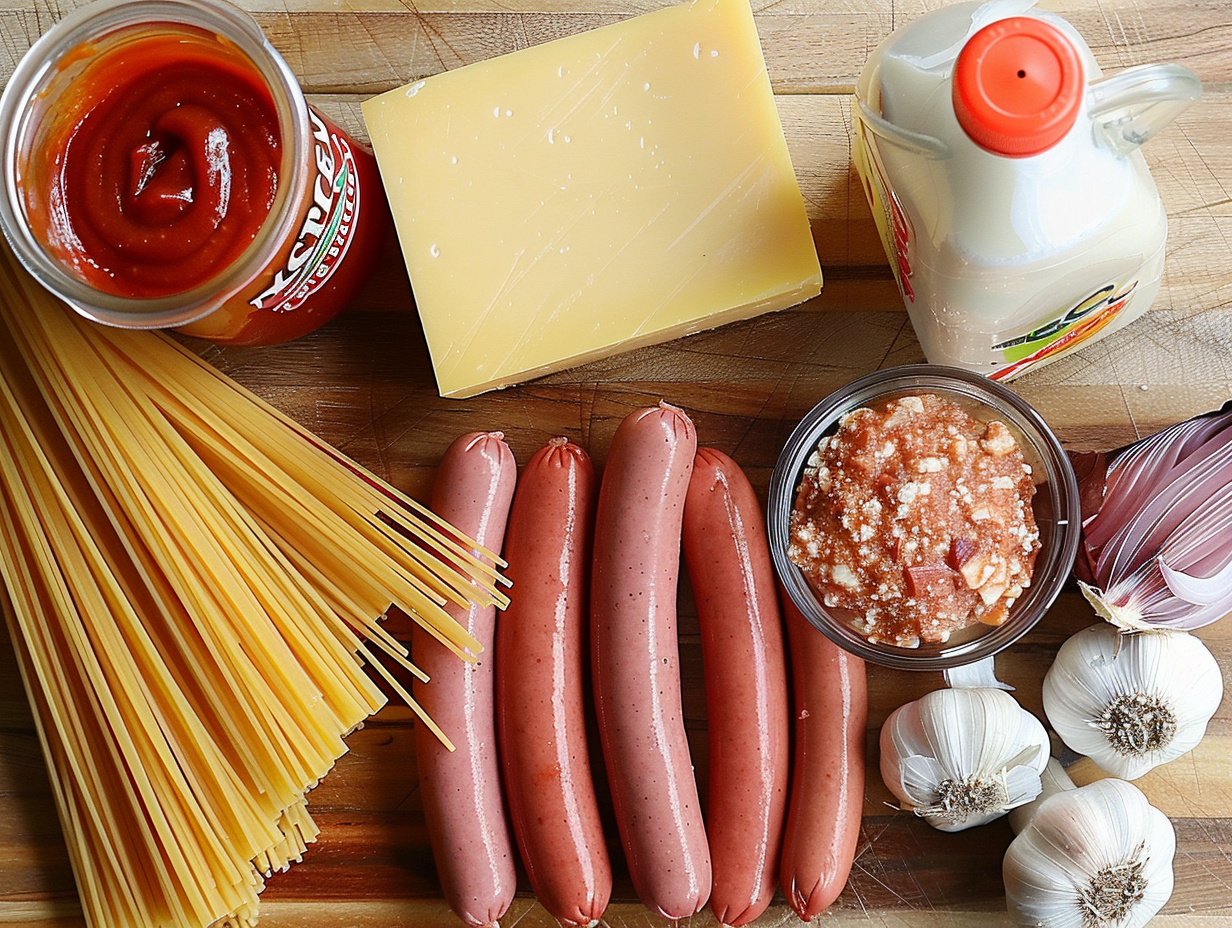
Filipino Spaghetti: Sweet Style, Parties, and How It Got This Way
What makes Filipino spaghetti different from Italian pasta, why it is a birthday-plate staple, and where to find Filipino comfort food in Quezon City.
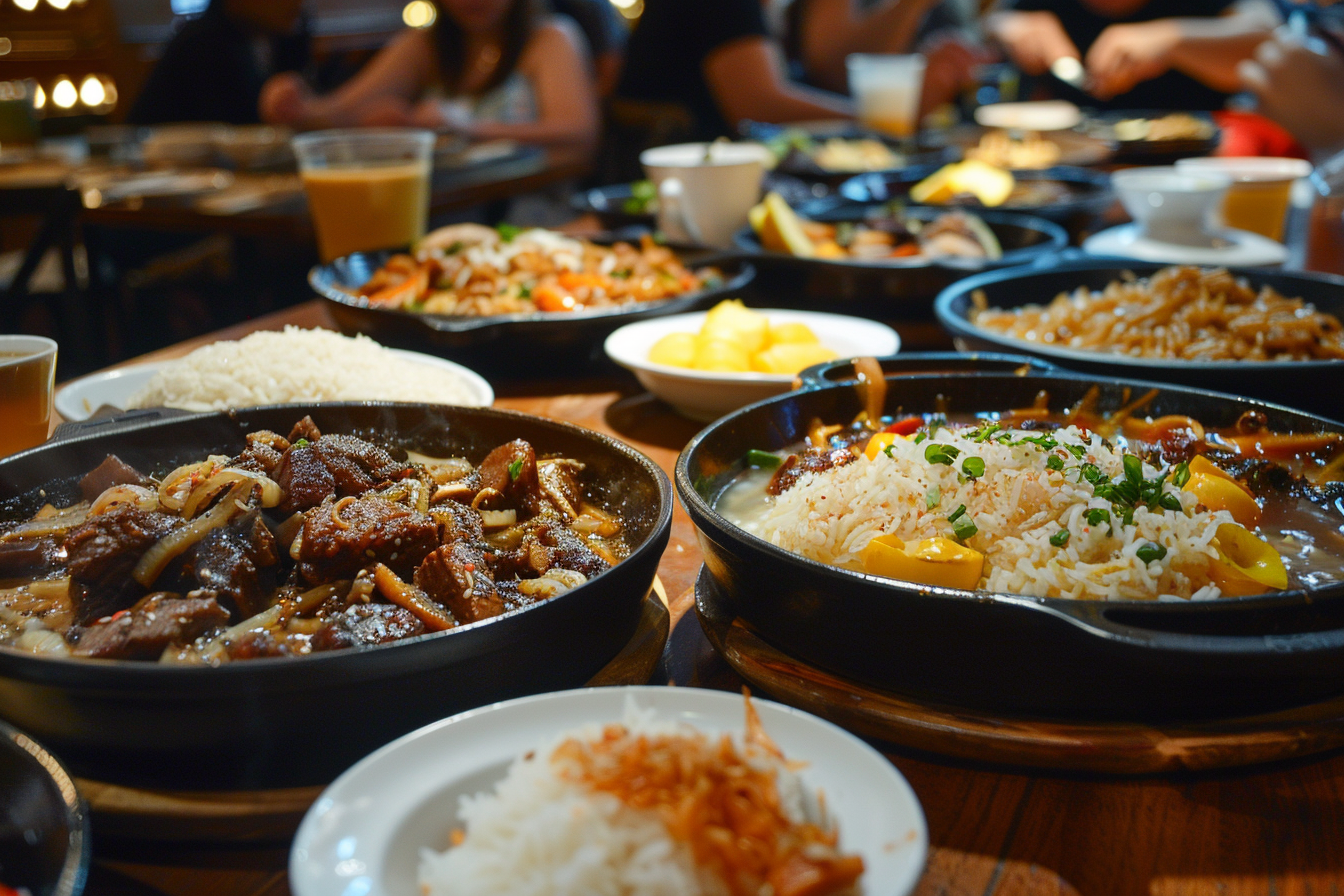
Manila Food Culture: Street Life, Chinatown, and Everyday Rhythms
How Manila eats—from Binondo noodles to mall food courts—and where to explore Filipino and Filipino-Chinese comfort food in Quezon City.